<img height="1" width="1" style="display:none;" alt="" src="https://px.ads.linkedin.com/collect/?pid=632193&amp;fmt=gif">

Manage your stakeholder engagement in the energy sector with Jambo

Manage stakeholder consultations efficiently by storing all stakeholder interactions in one place. This facilitates collaboration and helps ensure that everyone is on the same page.

By using Jambo SRM, you can maintain a clear picture of your stakeholder interactions, ensuring that your energy project stays on track and meets its objectives.

Watch the 1-min video
Book a demo
energy industry stakeholders

Why you need Jambo for the energy industry

stakeholder-engagement-software-energy

The energy sector has far-reaching consequences, powering industries and continents while affecting the lives of millions of people. This vast industry comprises various stakeholders with unique perspectives, needs, concerns, and preferences. Their input is crucial for its success. Energy teams are responsible for building and maintaining collaborative relationships with these diverse stakeholders.

These partnerships help drive companies toward efficient resource management. Jambo securely stores all stakeholder and engagement information in a central location, providing a single source of truth. By leveraging Jambo's capabilities, organizations can work towards building positive and trusting relationships with stakeholders and communities.


Jambo is trusted by governments and organizations worldwide
Securely store and organize your stakeholder information

Multiple team members and contractors may engage with hundreds of stakeholders and communities. 

  • Add all your critical contacts like Indigenous communities, landowners, governments, residents, community groups, NGOs, etc. 
  • Keep up-to-date details in one central and secure location and share them across your organization.
  • Control user permission levels and access to confidential records (so contractors can safely contribute, too).
  • If anyone leaves the team, their stakeholder information will remain available.
stakeholder profiles energy companies
stakeholder communication records for energy

Lower risk and build better stakeholder relationships

You're committed to working collaboratively with your stakeholders.

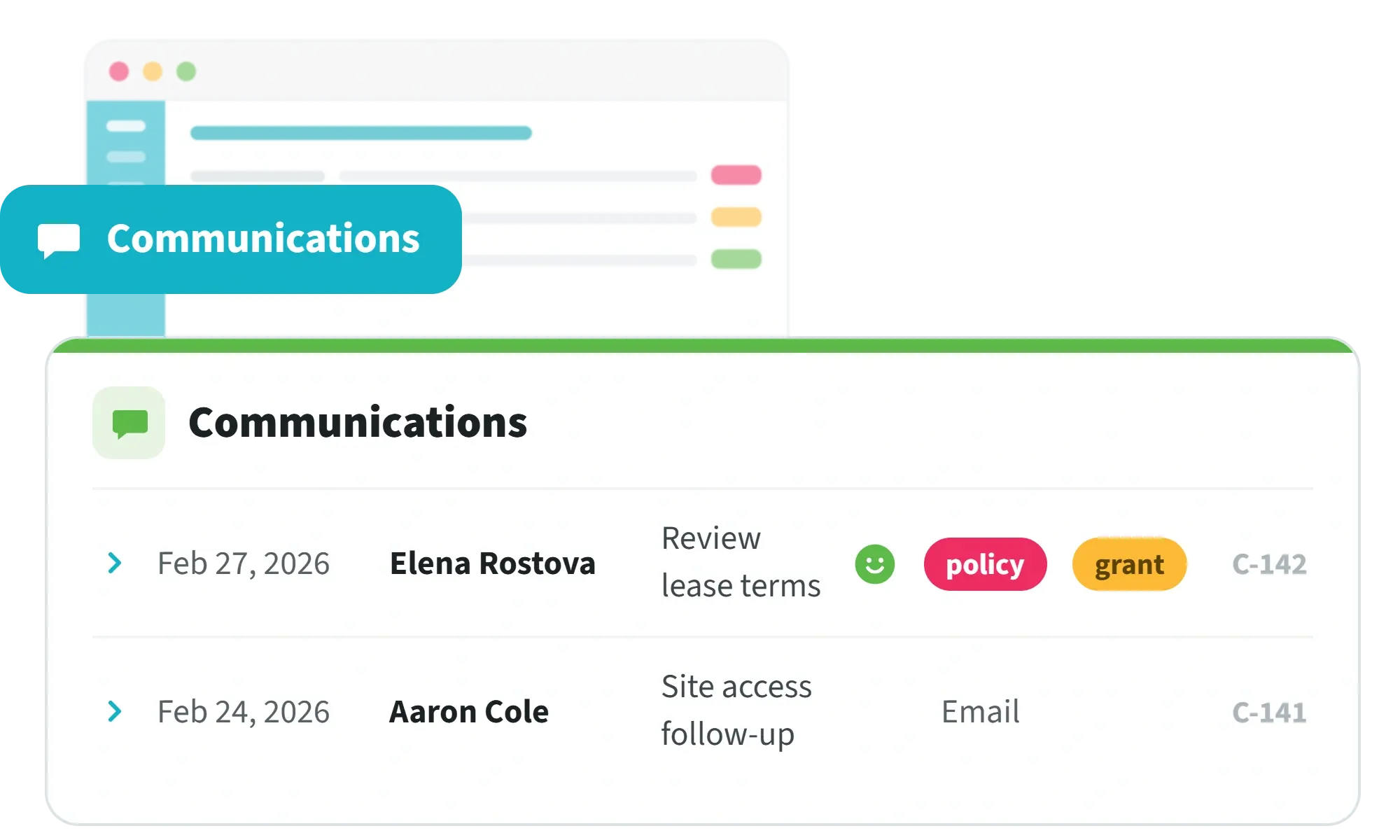
  • Consistently track and manage records of communication with stakeholders. 
  • All records are auto-linked so you can easily view the entire history of engagement with each stakeholder. 
  • Prepare for a meeting by reviewing a stakeholder profile so you can stay consistent in messaging.
  • Reference past conversations with stakeholders to gain trust in your organization

Stay on top of stakeholder issues and commitments

Reputation and risk management are essential to your organization.

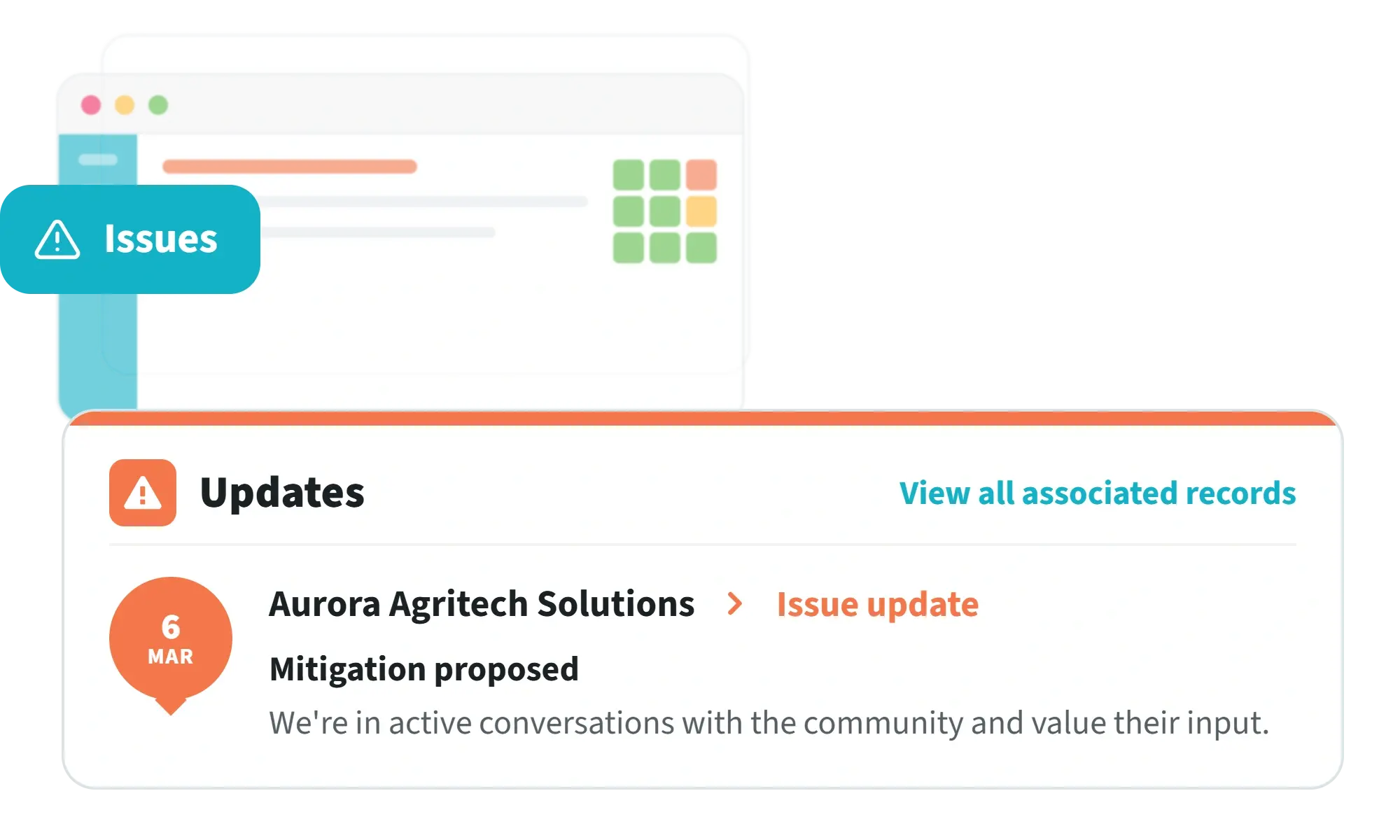
  • Issues can be received or identified at any stage of a project. Track issues or concerns, review them by priority and impact, and ensure they are resolved.
  • Commitments or mitigations can also occur and be made by anyone at any time - in regulatory approvals, permit applications, Indigenous agreements, etc. Still, they may not need to be fulfilled right away.
  • Log all commitments made and assign tasks to team members so they are fulfilled and not forgotten.
grievance management for energy industry
stakeholder reporting in energy industry

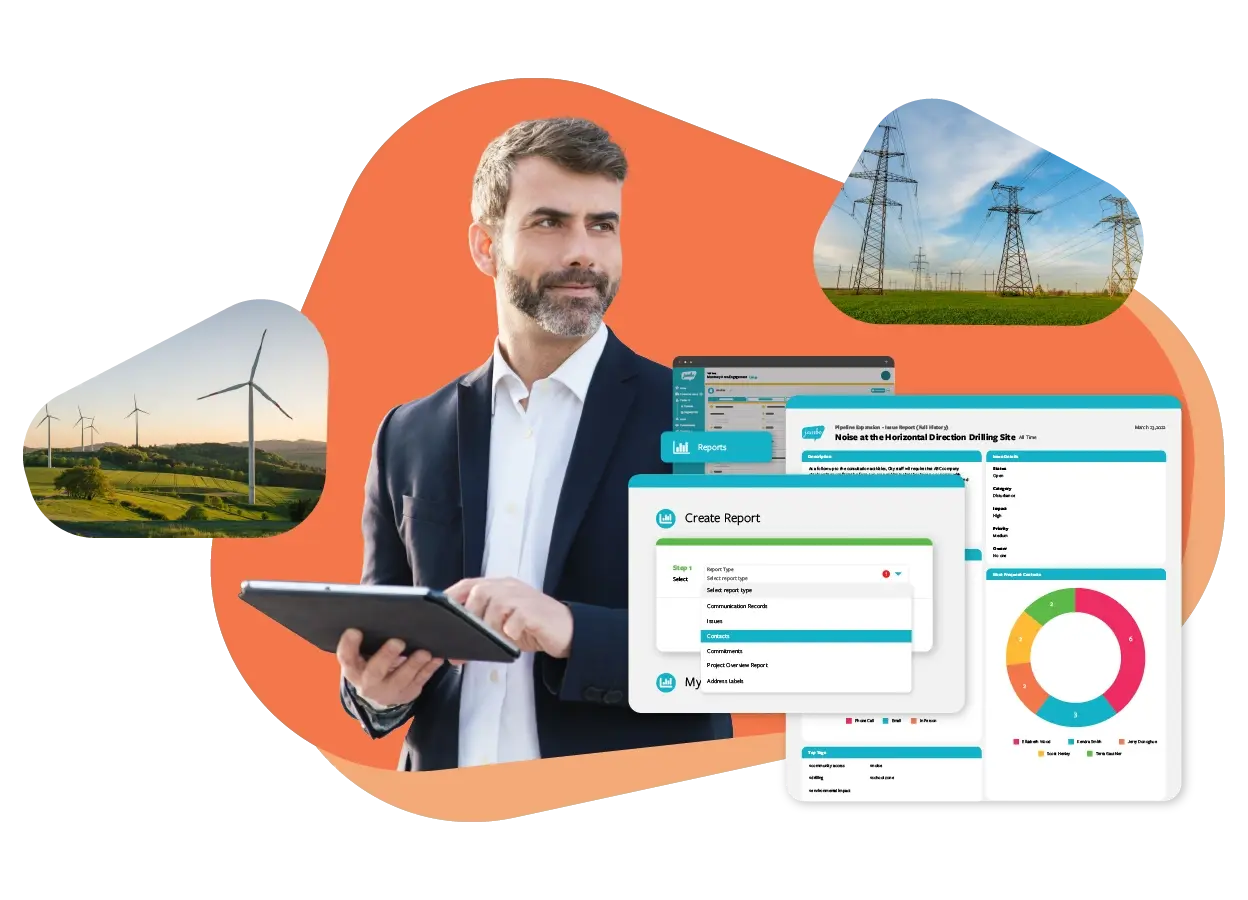
Simplify reporting and easily demonstrate consultation

Driving support for your project and providing timely updates can be challenging. 

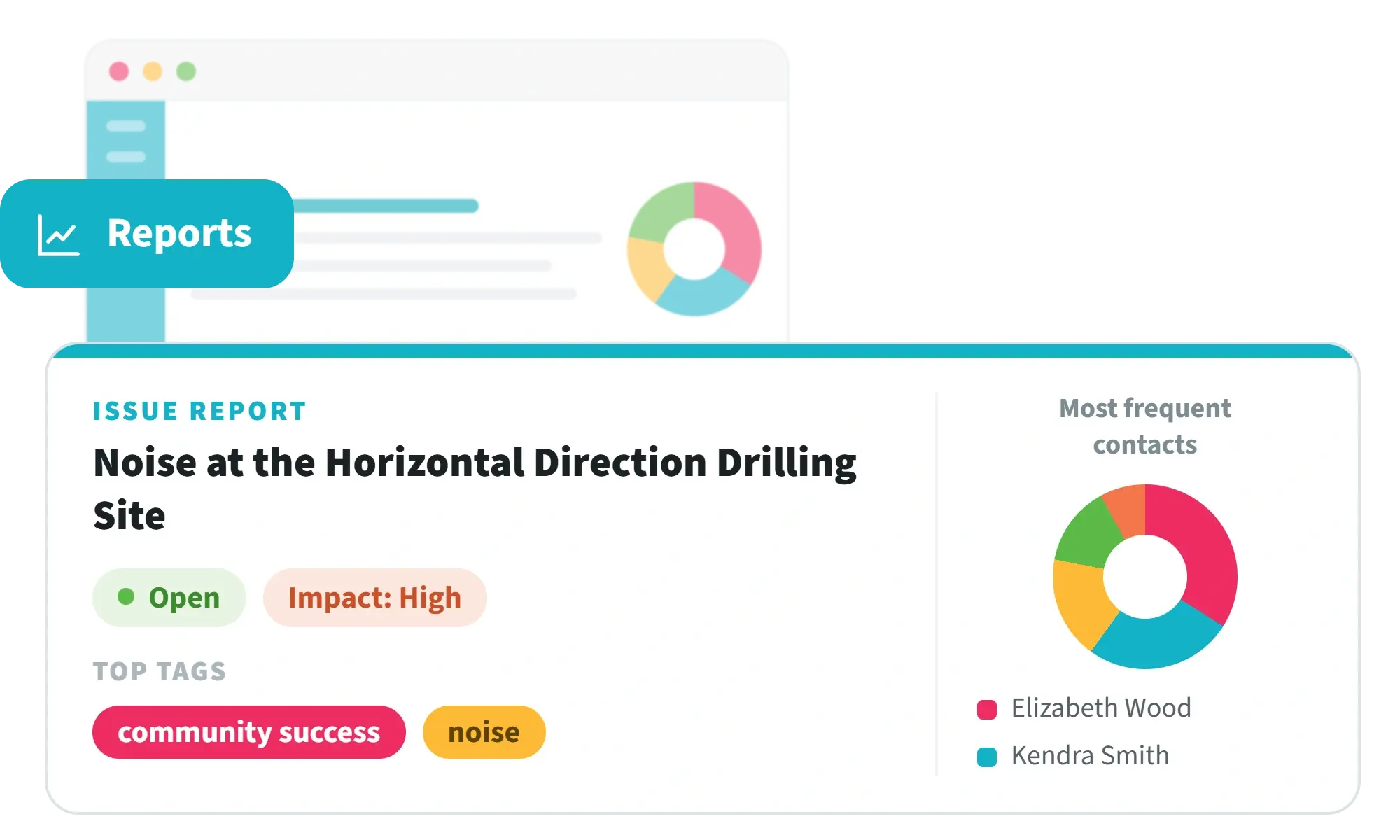
  • In seconds, you can create easy-to-understand project progress reports or detailed Indigenous consultation reports to satisfy regulatory reporting requirements.
  • Help show adequate consultation with project-affected persons with reports that show the entire history of engagement.
  • Create update reports for stakeholders and show how feedback received through engagement was used to inform plans.

Stakeholder engagement for data centre development

Data centre projects are energy-intensive infrastructure, and they face the same stakeholder challenges as any major energy project: community opposition, land access negotiations, Indigenous consultation requirements, utility coordination, and regulatory approvals that depend on a documented engagement record.

Jambo is used by data centre developers and the consultants managing engagement on their behalf. You can track every stakeholder interaction across multiple sites and project phases, log issues and commitments as they arise, and produce consultation records that support permitting and approvals. When multiple contractors are running engagements in parallel, Jambo keeps everything in one place so nothing falls through the cracks.

records
Mercer International logo
“Jambo has proved to be very useful in managing our increasing consultation requirements. The system tracks every single call, email and meeting and helps us be transparent in our regulatory reporting.”
Gordon Whitmore, Land Management Superintendent, Mercer International

Frequently asked questions about stakeholder engagement software for energy

Here, you can find answers to the most commonly asked questions about stakeholder engagement software for energy.

If you don't find the answer you're looking for, our friendly sales team is always here to help. You can contact us at hello@jambo.cloud.

What is stakeholder engagement software for energy companies?

Stakeholder engagement software for energy companies is a purpose-built platform for tracking and managing every interaction with the people and communities affected by energy projects. That includes landowners, Indigenous communities, regulators, government bodies, NGOs, and local residents. It replaces spreadsheets and generic CRMs with tools built for consultation logging, commitment tracking, issue management, and regulatory reporting.

Jambo is a Stakeholder Relationship Management (SRM) platform used by energy companies and engagement consultants working across oil and gas, utilities, transmission, pipelines, and renewable energy development.

What types of energy projects is Jambo used for?

Jambo is used across a wide range of energy and energy-adjacent projects, including oil and gas development, pipelines, electricity transmission and distribution, utility infrastructure, renewable energy (wind, solar, and hydro), and data centre development.

Data centres are increasingly energy-intensive infrastructure projects that face the same stakeholder and consultation challenges as traditional energy projects: community opposition, land access negotiations, Indigenous consultation requirements, utility coordination, and regulatory approvals that depend on a documented engagement record. Jambo is used by both project developers and the engagement consultants managing consultation on their behalf.

How is SRM software different from a CRM for energy stakeholder engagement?
A CRM (Customer Relationship Management) tool is built for sales pipelines and customer contacts. An SRM, or Stakeholder Relationship Management platform, is built for consultation and engagement workflows: logging community meetings, tracking commitments made in regulatory applications or Indigenous agreements, managing issues and concerns raised by affected parties, and producing audit-ready consultation records. For energy companies, the difference matters because regulatory bodies and approval processes require documented proof of meaningful engagement, and a CRM has no native way to produce that.
We already use a CRM like Salesforce or Dynamics. Why would we need Jambo?
CRMs are built to manage sales pipelines, not stakeholder relationships, so engagement teams often find them costly, hard to adapt, and difficult to get colleagues to use. Jambo is purpose-built for stakeholder engagement and consultation: it's structured around communications, issues, commitments, and consultation reporting rather than deals and revenue. Because it's designed for how engagement teams work, it's easy for everyone to log records consistently, which makes your reporting reliable.
Why do energy companies move away from spreadsheets and email for stakeholder engagement?

Spreadsheets and email folders work until project volume grows, at which point they break. Engagement records end up scattered across personal inboxes, shared drives, and individual files, with no way to search the full history of a relationship. Jambo replaces that patchwork with one secure, central database.

Every communication, issue, and commitment auto-links to the stakeholder's profile, and you can add emails directly from Outlook or Gmail using the free Jambo for Outlook add-in or your unique project email address, so nothing stays buried in someone's inbox.

How does Jambo make stakeholder reporting faster for energy projects?

With all your engagement data in one place, you can create summarized or detailed reports in seconds, in CSV or PDF format. Use pre-built reports or build your own with filters and show the entire history of engagement with a single stakeholder, community, or organization.

Dashboards, analytics, and customizable grid views also let you quickly answer information requests without manually compiling data from multiple sources.

Is Jambo secure enough for sensitive energy project data?

Jambo holds ISO 27001:2022 and ISO 27017:2015 certifications, with all data stored and AI processed in Canada on AWS Canada infrastructure.

Jambo does not train on customer data. The platform holds federal security clearances and is used by the Canada Energy Regulator, the Alberta Energy Regulator, the British Columbia Energy Regulator, the Government of Canada, and several provincial governments. Role-based permission controls let you manage what contractors and external team members can access without compromising sensitive records.

What does Jambo help energy teams track?
Jambo centralizes all stakeholder data and engagement records in a single place. Energy teams use it to track stakeholder profiles and contact histories, log communications like calls, site visits, emails, and meetings with auto-linked records, manage issues and concerns raised during consultation, record commitments made in permit applications, regulatory approvals, or agreements with Indigenous communities, and generate reports that demonstrate the full history of engagement for regulatory submissions.
Can Jambo help us meet regulatory, permitting, and consultation requirements?
Yes. Jambo is built to help you demonstrate adequate consultation. You can generate detailed Indigenous consultation and project progress reports that satisfy regulatory reporting requirements, attach supporting documents as evidence, and rely on a change history and audit trail that show who created, edited, or changed each record. This gives you defensible, audit-ready engagement records for environmental assessments, permit applications, and regulatory reviews.
Can engagement consultants use Jambo alongside an energy company's internal team?

Yes. Jambo is designed for teams where multiple people, including external contractors and engagement consultants, are contributing records. Permission levels can be set so consultants can log interactions and view relevant records without accessing confidential information outside their scope. When a contractor's engagement ends, all records remain intact and accessible to the internal team.

How does Jambo help teams see who's already engaging with a stakeholder?

Every team member works from the same shared stakeholder profiles, so anyone can open a contact and see the full history of communications, issues, and commitments before reaching out.

Centralized contact management keeps details consistent across projects, and Global View shows engagement with an individual or organization across your entire portfolio. A shared calendar of planned communications and commitments also helps teams avoid duplicating outreach or scheduling conflicts.

How does Jambo prevent commitments to communities and regulators from being missed?

Commitments made in regulatory approvals, permit applications, or Indigenous agreements often don't need to be fulfilled right away, which is exactly when they get forgotten.

In Jambo, you log every commitment, assign it to a team member as a task, and set auto-reminders so it's actioned on time. You can also set recurring commitments for obligations that repeat at regular intervals, and track issues by priority and impact through to resolution.

What happens to our stakeholder records when someone leaves the team?
They stay in Jambo. Because every interaction is logged against a central stakeholder profile rather than living in one person's inbox or spreadsheet, institutional knowledge doesn't leave with staff or contractors. The full engagement history, including communications, issues, commitments, and attached documents, remains searchable and available to whoever takes over the relationship.
Does Jambo work for large energy projects with multiple sites or phases?
Yes. Jambo is designed for exactly the moment when a growing team or an expanding project portfolio outgrows manual processes. Project view segments data by initiative, so each project team works in its own space, while Global View rolls engagement up across your whole organization. Bulk contact importing, duplicate management, role-based user permissions, and confidential contractor access let you add team members, contractors, and projects without losing control of your data.
How is Jambo different from other stakeholder engagement tools?
Teams that switch to Jambo from other engagement platforms usually do so because their previous tool was complicated to use, slow to load data, or difficult to pull reports from, leading staff to stop using it. Jambo focuses on ease of use, so your whole team logs their engagement: add records in a few clicks, capture emails automatically through the Outlook add-in, and generate reports in seconds. Consistent adoption is what turns software into a reliable system of record.

Want to find out if Jambo is the right stakeholder relations tool for your organization?

Book a 15-minute call to discuss your stakeholder engagement challenges and needs. We want to help you determine whether Jambo is the right platform for your team.